
More than 18% of parents believe their babies handle goat-milk formulas more comfortably than cow-milk options. This shift has significantly raised interest in Holle Organic Goat Formula across the United States.
Holle Goat Formula
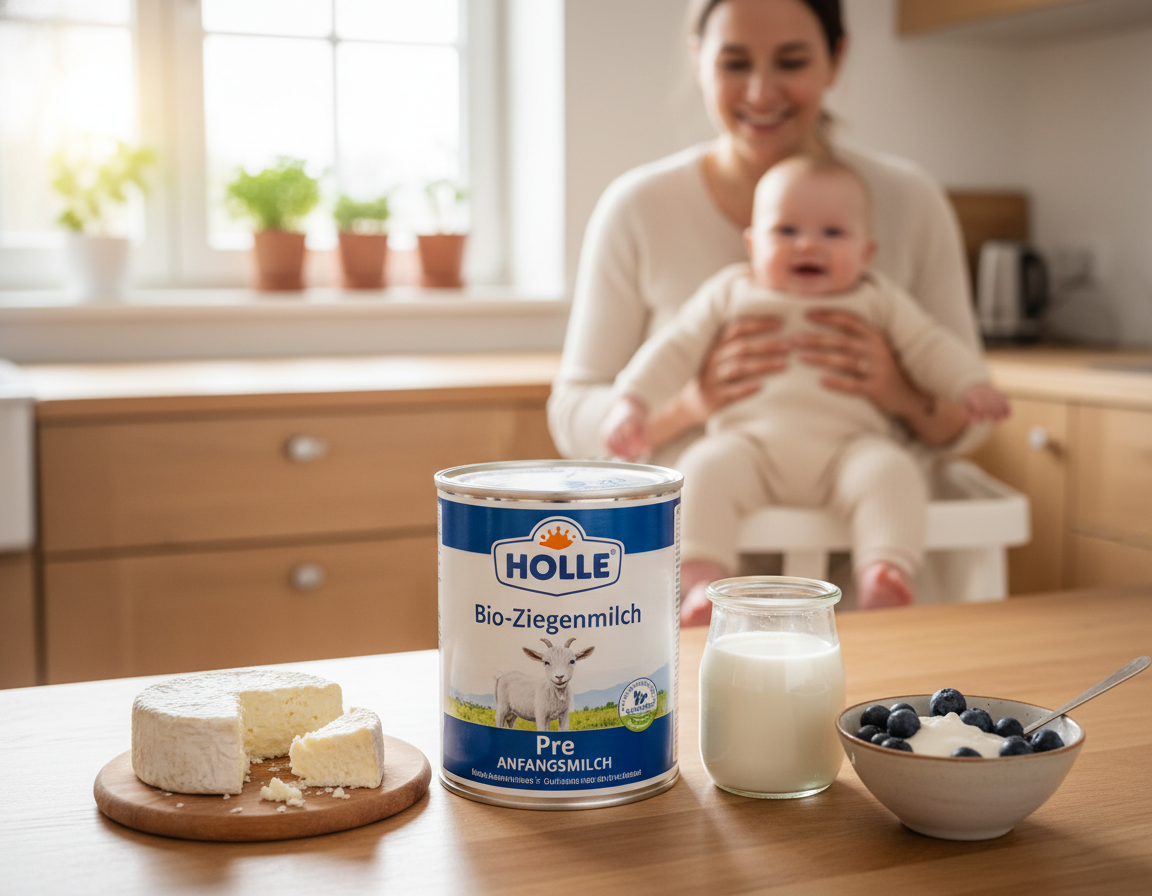
Holle organic infant goat milk formula is created by a European brand with a well-known background. Since being founded in Switzerland in 1933, the company has built its reputation around biodynamic and organic baby nutrition. For U.S. parents looking for an organic goat milk baby formula, Holle provides various stages made from Demeter whole goat milk or certified organic whole goat milk.
In this article, we will examine why some parents consider Holle goat formula as a healthy alternative for certain babies. We’ll discuss its nutrient profile, digestive benefits, ingredient transparency, and feeding guidance for Holle goat milk formula 1 and other stages. Whether Holle organic goat milk for newborns is on your shortlist or you are comparing it against cow-milk formulas, this guide is written to help you make more informed decisions.
Why Many Parents Prefer Holle Organic Goat Formula For Infant Nutrition
In the U.S., many parents seek out gentle, organic options for their infants. Holle, established in 1933, is a well-known name for baby nutrition. They are known for short ingredient lists and thoughtful sourcing. Many parents search online where to buy Holle formula because availability can shift between stores, suppliers, and regions.
Holle is committed to short ingredient lists and does not include unnecessary additives. Families who prioritize organic products often appreciate Holle Bio because of its clear labeling and traceability. When reviewing an organic goats milk formula, it’s helpful to check the tin for batch and stage details. Package sizes and minor formulation notes can change over time.
Holle Brand Background And European Organic Standards
Holle’s roots are in Swiss and German supply chains, working within strict European infant formula composition rules. Those rules are not the same as U.S. regulations and place focus on protein, carbohydrate, and micronutrient composition. Many American families import Holle goat milk tins for its organic sourcing and minimal processing.
Demeter Biodynamic And EU Organic Certifications Explained
Demeter certification is stricter than standard organic, focusing on soil health, animal welfare, and internal farm cycles. It bans GMO feed and synthetic pesticides. Many Holle goat milk products feature Demeter marks that reflect biodynamic farming practices.
EU Organic certification calls for a minimum of 95% organic agricultural ingredients while banning GMOs and most synthetic inputs. Holle formulas follow these EU Organic baselines, providing reassurance for parents choosing an organic goats milk formula.
How Holle Goat Milk, Holle Cow Milk, And Holle A2 Options Differ
Holle Bio Goat Milk is created from whole goat milk and is designed for gentler digestion through softer curds and smaller fat globules. That makes it interesting to parents who are researching alternatives to standard cow-based formulas or looking at Holle goats milk formula for tolerance-related reasons.
Holle Bio Cow Milk is based on organic skimmed cow milk and uses lactose as the main carbohydrate. The line is available in PRE and staged versions for various age ranges.
Holle A2 comes from cows that produce only A2 beta-casein protein. This option is for families preferring cow-milk nutrition with A2-like curd behavior, similar to goat milk digestion patterns. Each of the three lines emphasizes minimal additives, organic vegetable oils, and DHA derived from algae.
Key Nutritional Benefits Of Holle Goat Milk Formula
Holle organic goat milk formula is formulated to support steady growth and development in infants. It delivers a balance of energy, fats, protein, and carbohydrates, reflecting natural feeding goals. Parents and pediatricians often evaluate Holle’s macronutrients, micronutrients, and essential fatty acids to other formulas.
Macronutrient Breakdown
Each 100 ml of Holle Goat Stage 1 contains about 68 kcal. The formula contains 3.4 g total fat, including around 1.2 g saturates, 1.5 g monounsaturates, and 0.6 g polyunsaturates. The formula contains 522 mg of linoleic acid omega-6 and 44 mg of linolenic acid omega-3. With 1.4 g protein per 100 ml, it produces a softer curd than many cow formulas, which may assist digestion. Total carbohydrate content is 8.0 g per 100 ml, entirely from lactose, which provides a familiar sugar source for infant gut microbes.
Micronutrient And Vitamin Fortification
Holle organic goat milk formula is fortified with calcium at 72.2 mg per 100 ml and iron at 0.54 mg per 100 ml. The formula also includes 1.5 mcg vitamin D and 0.11 mcg vitamin B12 per 100 ml. It is also fortified with iodine, zinc, selenium, phosphorus, magnesium, vitamin A, vitamin C, vitamin E, folic acid, niacin, biotin, and choline. These nutrients are needed for bone growth, red blood cell formation, immune support, and energy metabolism in infants.
DHA And ARA For Brain And Eye Development
Holle contains 15 mg DHA and 15 mg ARA per 100 ml, with DHA sourced from microalgae Schizochytrium sp. and ARA from Mortierella alpina oil. Algal DHA is a plantlike marine sustainable source that helps support neural and visual development. Its fat blend uses organic vegetable oils such as sunflower and rapeseed, which supply essential fatty acids for neurodevelopment and healthy growth.
When reviewing a goat milk infant formula, compare Holle’s nutrition to pediatric guidelines in your country. The nutrient levels in this organic goat milk formula adhere to European standards, guiding families in their choice of a goat-based alternative.
Digestive And Tolerance Advantages Of Goat Milk Formula
Parents often report that goat milk infant formula is easier on their babies’ stomachs. Holle goats milk formula is designed to leverage goat milk’s natural properties. For some infants, it may ease feeding discomfort and support more comfortable stooling.
Smaller fat globules and softer curd formation are important features of goat milk. These characteristics produce a finer emulsion and softer curd in the stomach. This can contribute to less digestive strain compared to formulas with firmer curds.
Goat milk’s natural A2-like protein profile is also worth considering. Many families find tolerance improves after changing from standard cow milk formulas. Holle offers both goat and A2 cow options. This supports caregivers seeking that specific protein profile.
Lactose remains the primary carbohydrate in Holle Goat Stage 1. For most infants, lactose helps support healthy growth and gut flora. Some babies with mild lactose sensitivity may benefit from goats milk baby formula. However, babies with diagnosed lactose allergy or severe intolerance require guidance from a pediatrician.
Before changing to any goat infant formula, it is important to speak with a pediatrician. A healthcare professional can differentiate cow milk protein sensitivity, lactose concerns, and other feeding-related problems. A professional evaluation ensures the formula aligns with each baby’s unique needs.
Holle Goat Formula Safety, Purity, And Ingredient Transparency
Parents who want clear ingredient information often value third-party testing and accessible lab reports. Holle offers access to testing data and follows European safety standards. That transparency helps families as they evaluate Holle goat milk formula safety and make infant-feeding decisions.
Clean Label Project recognition reflects Holle’s commitment to screening for heavy metals, pesticides, and contaminants. The Clean Label Project purity award for certain Holle products indicates they meet strict third-party limits. Because Holle makes test results available upon request, parents can have more informed conversations about holle goat milk purity with pediatricians or retailers.
The company adheres to European testing and regulatory frameworks, carrying out internal quality checks. Recent U.S. policy focus on heavy-metal limits has encouraged greater transparency from brands. Parents who want to confirm Holle goat milk formula safety can request lab results or consult a pediatrician before switching.
Holle’s ingredient lists are concise and purposeful. Their organic goat formula does not include artificial preservatives, synthetic colors, added flavorings, and refined sugars such as corn syrup or sucrose. Lactose is used as carbohydrate source, while some formulas contain organic oils such as sunflower and rapeseed. Any product-specific differences are listed on the label.
The labels clearly show milk and milk products as present ingredients. Holle goat formulas are not considered hypoallergenic and should not be given to infants with confirmed cow milk protein allergy unless a pediatrician advises it. Carefully reviewing allergen details is essential when deciding whether the formula fits a baby’s dietary needs.
When parents search where to buy goat milk for babies, it is best to use reliable retailers, specialty shops, or verified online stores. Retailers often provide packaging information and batch testing details upon request. Verifying sources that display lab reports or offer direct customer support can confirm holle goat milk purity before purchase.
Feeding, Sizing, And Buying Holle Goat Formula: Practical Guidance
Below are clear feeding and storage notes to assist caregivers use Holle Goat Stage 1 safely and efficiently. Always refer to the tin instructions and consult a pediatrician for guidance tailored to the baby.
Stage 1 Feeding Recommendations And Calculator Data
A single Holle Goat Stage 1 scoop equals 4.4 grams. Every 400–800g tin provides approximately 91 scoops. Common ready-to-feed examples follow Holle guidance and illustrate that daily needs differ by age.
| Baby Age | Prepared Water | Powder Scoops | Ready Volume | Meals/Day | Approximate Boxes Needed |
|---|---|---|---|---|---|
| Weeks 2–4 | 90 milliliters | Three | 100 mL | 5–7 | ≈3 age bracket |
| 2 months | 150 milliliters | Five | 170 ml | 4–5 | Approximately 12 for the age bracket |
| Around 3 To 4 Months | 180 ml | Six | 200 ml | 4 to 5 | Approximately 12 for the age bracket |
| 5+ months | 210 ml | 7 scoops | 230 milliliters | 3 to 4 | About 8 per month |
Exclusive formula feeding often requires around 7.5 boxes each month on average. Actual consumption falls if supplementing with breast milk or solids.
Preparation, Storage, And Expiration Date Notes
Sterilize bottle and nipple by boiling for 3 minutes. Boil the water first, then let it cool to about 120°F before adding the powder. Add the measured scoops to the water, shake well, and cool the feed to about 100°F before feeding.
Use prepared feeds within two hours at room temperature or within 24 hours if refrigerated. Powdered formula should not be frozen. Store opened tins sealed in a cool, dry place and use within three to four weeks unless the tin specifies differently.
Holle uses European DD/MM/YYYY expiration dates. U.S. buyers should check tins carefully so the day, month, and year are understood correctly.
Where U.S. Families Can Buy Holle Goat Milk Formula
Holle goat formulas can be found through specialty retailers, selected Whole Foods Market locations, premium grocery stores, and European formula suppliers. Many online stores include subscription options with discounts and flexible delivery windows.
For U.S. shoppers looking up where to buy organic goat milk or where to buy goat milk for babies, Love Organic Baby is a known retailer carrying Holle goat milk formula in several stages and sizes. Love Organic Baby includes U.S. shipping from domestic warehouses, subscription options, and customer support.
When searching where can i buy organic goat milk or where can i buy holle formula in the us, check product pages for stage availability, tin size, certifications, and buyer reviews. Retailers that let you buy goat milk by subscription ease reordering and help prevent gaps between shipments.
When selecting a seller, inspect packaging and expiration dates when the order arrives. Compare tin sizes—400g, 600g, and 800g are common—and check return policies if a formula does not suit an infant.
Closing Summary
Holle Organic Goat Formula is recognized as a European formula option rooted in Demeter principles. It boasts a simple ingredient list and uses lactose as its carbohydrate source. It also contains DHA from algae and is fortified with iron and vitamins, meeting infant growth needs. Its formulation reflects EU composition standards.
Parents should read closely labels and speak to a pediatrician about possible supplementation needs. The formula’s digestive and tolerance benefits are worth considering. It features smaller fat globules, softer curd formation, and A2-like protein characteristics. These traits help make it a strong contender for babies looking for an alternative to cow-milk formulas.
Holle’s clean-label focus and third-party recognition strengthen its appeal. This reassurance about purity and ingredient transparency is invaluable for parents. When families ask where to buy goats milk formula, many U.S. buyers use specialty retailers and online stores. These sources provide U.S. shipping and subscription options.
It is necessary to remember that European expiration dates use DD/MM/YYYY and to observe the manufacturer’s storage and opened-tin instructions. Doing so protects formula safety and quality. In conclusion, Holle goat milk formula infant products are a trusted organic option for families. Families should consider their baby’s tolerance, feeding volume, and nutrient needs with a pediatrician. This will help determine if the formula is suitable for their baby’s individual requirements.